Thanksgiving is about five weeks away, and if your carpets could talk, they would probably ask for a little mercy. The coffee ring by the couch, the mystery spot in the hallway, the place where the dog had that accident back in July — you have walked past them a hundred times. But guests notice floors. Not with a magnifying glass — with their noses, and with the first impression they get walking through your front door.
Here is the good news about carpet stain removal: your carpets do not need to look brand new. They need to look cared for. When guests visit, they register smell, general cleanliness, and whether a home feels looked after. Every one of those is fixable in an afternoon — including stains you assumed were permanent years ago.
If a stain has truly beaten every DIY attempt, our carpet and floor cleaning service finishes the job with commercial hot-water extraction. But try the pro playbook below first — most holiday carpet emergencies end right here.
Forget Perfect — Aim for Guest-Ready
Old stains are stubborn for real chemical reasons. Spills bond with carpet fibers over time, foot traffic grinds them deeper into the pile and the padding, and past cleaning attempts can set a stain permanently — especially if soap was left behind, because soap residue grabs new dirt and drags the stain back within days.
That sounds discouraging, but it actually frees you. The goal is not a factory-fresh carpet. The goal is noticeably lighter stains, even color, zero odor, and a fresh look — and that is completely achievable, even on carpets you felt embarrassed about last year.
The One Rule That Changes Everything: Blot, Never Scrub
Almost every carpet disaster gets worse the same way: someone scrubs it. Scrubbing frays the fibers, spreads the stain outward, and pushes it deeper into the carpet. From here on, the only motion your hand makes is a firm press-and-lift with a clean cloth.
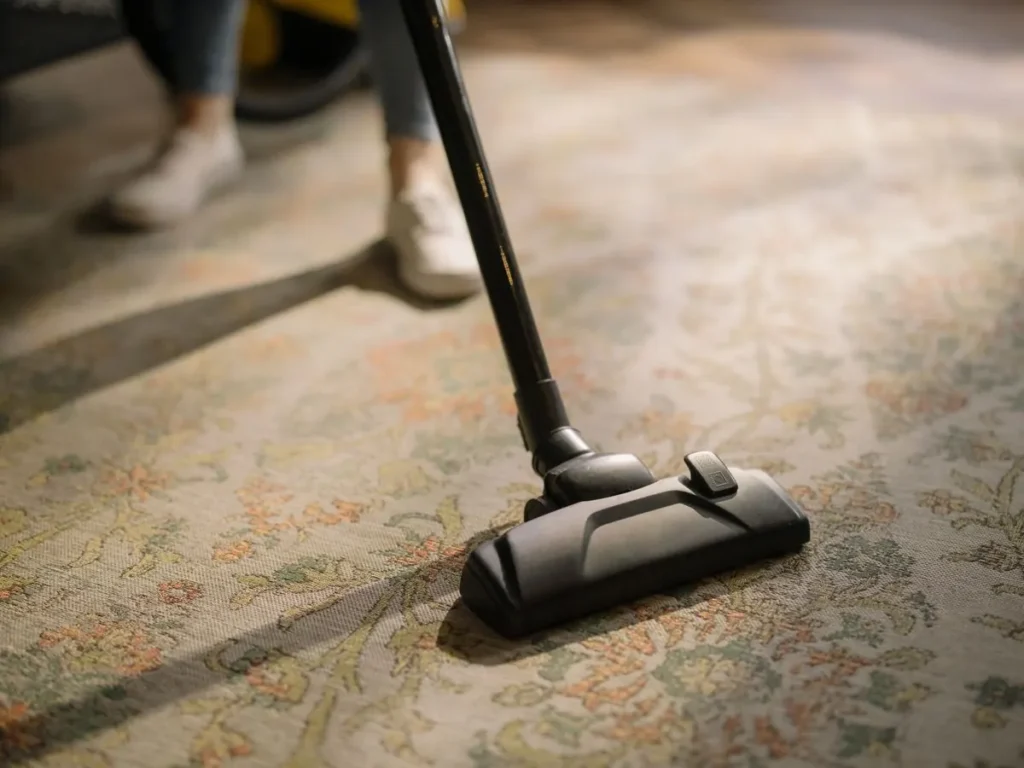
And before any wet cleaning touches the carpet, vacuum — slowly, two passes in every direction, with a rotating brush if you have one. Dry soil plus cleaning liquid turns into muddy residue that makes everything worse. This one step takes ten minutes and changes the whole result.
The 3-Ingredient Stain Fighter Under Your Sink
You do not need a shelf of specialty products. Mix this in a spray bottle:
- 2 cups warm water
- 1 tablespoon white vinegar
- 1 teaspoon clear dish soap
Lightly mist the stain — do not soak it. Blot with a clean white cloth, then rinse by dabbing with a cloth dampened in plain water, and blot dry. The vinegar breaks down organic and mineral stains, the dish soap dissolves grease, and blotting lifts the stain into the cloth instead of spreading it. Always test any solution on a hidden corner first.
Stain by Stain: What Actually Works
Coffee and tea: Blot fresh spills immediately, then work in the DIY solution above. If a brown shadow remains after drying, repeat with full drying time between rounds — patience beats stronger chemicals here.
Red wine: Blot up everything you can, then pour a little club soda on the spot. The carbonation lifts the liquid out of the fibers before it sets. Blot, repeat, then finish with the DIY solution and rinse well.
Grease and cooking oil: Water alone will not touch these. Cover the mark with baking soda or cornstarch for 15 to 30 minutes to absorb the oil, vacuum it up completely, then treat with the dish-soap solution.
Pet urine and odor: Blot thoroughly, then use an enzyme-based cleaner — enzymes are the only thing that breaks down the uric acid crystals causing the smell. Vinegar and baking soda mask odor; they do not remove it. Cover the treated spot with a damp towel for several hours or overnight, then blot dry. (Our pet odor removal guide goes deeper on this one.)
Old, set-in stains: Rehydrate the spot with a little water, then apply a paste of 3 tablespoons baking soda and 1 tablespoon hydrogen peroxide. Cover with plastic wrap and leave it 8 to 12 hours. Test a hidden corner first — peroxide can lighten dark carpets.
The Step Everyone Skips: Rinse It Clean
Here is why “fixed” stains come back within days: leftover detergent. Soap residue sitting in the carpet grabs dirt from foot traffic and the air, and the stain reappears like it never left. After treating any stain, keep misting with plain water and blotting until a white cloth comes away completely clean — no soap, no color, nothing. Boring? Yes. The difference between a stain that stays gone and one that returns? Also yes.
Dry It Right or the Stain Comes Back
A damp carpet that never fully dries can brown even after the stain itself is gone. Stack clean paper towels or absorbent pads on the spot, weigh them down with something heavy, and point a fan at it. Give it six to eight hours before anyone walks on it. Once it is fully dry, vacuum the area and use your fingers or a soft brush to lift the pile back up.
When the Stain Wins: Call the Pros
Some stains are past DIY — contamination soaked into the pad, large traffic areas, or delicate fibers like wool and silk that should never meet peroxide or ammonia. The Carpet and Rug Institute recommends professional cleaning every 12 to 18 months for good reason: commercial hot-water extraction pulls out what home methods cannot reach, and it resets the whole room, not just the spots.
Our team at Fistfullofsudz does in a few hours what takes a homeowner a full weekend: commercial-grade hot-water extraction for carpets, machine scrubbing for hard floors, and detailed work on the spots everyday cleaning misses. We bring every supply, we confirm flat pricing before we begin, and our trained, uniformed team treats your home like our own.
Call for a FREE Quote — (770) 733-6076
Frequently Asked Questions
Can old carpet stains really come out?
Often, yes — at least dramatically lighter. Old stains bond with the fibers over time, so expect improvement rather than perfection: lighter color, even tone, no odor. A baking soda and hydrogen peroxide paste left on overnight handles many set-in stains; always test a hidden corner first.
Why did the stain come back after I cleaned it?
Leftover cleaning residue. Soap left in the carpet attracts dirt, and the stain reappears within days. Rinse by blotting with plain water until a white cloth comes away clean, then dry the spot completely with weighted towels and a fan.
Is it better to rent a carpet cleaner or hire a professional?
Rental machines work for surface freshening but leave carpets wetter and extract less soil. Professional hot-water extraction cleans deeper, dries in hours, and handles stains rentals cannot touch — worth it before guests arrive or for any stain that survived DIY.
How do I get pet urine smell out of carpet for good?
Use an enzyme-based cleaner — enzymes break down the uric acid crystals that cause lingering odor, which vinegar and baking soda only mask. Saturate the area, cover with a damp towel for several hours, then blot dry. If the pad underneath is soaked through, professional extraction is the real fix.
How often should carpets be professionally cleaned?
The Carpet and Rug Institute recommends every 12 to 18 months. Homes with pets, kids, or heavy holiday foot traffic benefit from the shorter end of that range.