If your eyes are itchy and your nose will not stop running this October, you are not imagining it. Ragweed is the primary fall pollen producer in Georgia, peaking through September and October — and this year’s forecast puts Atlanta among the cities hit hardest by weed pollen. To truly reduce allergens in your home, you have to fight them where they settle: floors, fabrics, and the air itself.
Here is the uncomfortable truth: most fall pollen does not stay outside. It rides in on shoes, jackets, backpacks, and pet fur, then settles into carpet fibers and bedding. Vacuuming once in a while will not cut it. If your carpets have not had a real deep clean in a while, our carpet and floor cleaning service pulls allergens out from deep in the fibers — but there is plenty you can do yourself first. Here is the pro playbook.
Why Fall Hits Riverdale Homes the Hardest
Ragweed season in Georgia starts in August, peaks in September and October, and only tapers off in late October or early November when cooler weather arrives. A single ragweed plant can release over a billion pollen grains in a season, and those grains travel for miles on dry, windy days.
Clayton County adds its own twist: dust mites, pollen, and pet dander are all prevalent in this area, so indoor air quality takes a double hit. Add Georgia’s humidity, and you get mold spores joining the party — especially in bathrooms and basements. Fall is not just one allergen; it is a whole lineup.
The good news: unlike the pollen cloud outside, your home is territory you control. Every step below makes a measurable difference.
Start With the Air: Filters and Humidity
Your HVAC system is either your best defense or your biggest allergen distributor. A dirty filter just recirculates pollen and dust through every room.
- Upgrade to a pleated or HEPA-grade filter — HEPA filters catch 99.97% of particles down to 0.3 microns, which includes pollen
- Swap filters monthly during pollen season — in spring and fall, a filter clogs faster than you think
- Keep indoor humidity below 60% — the University of Georgia Extension recommends this ceiling to stop mold growth and slow dust mites
- Run the fan, not the windows — keep windows closed during peak pollen days and let the filtered system do the work
If your vents puff out a little dust cloud when the system kicks on, that is a sign the ductwork and returns need attention too.
Dust Like You Mean It: Damp, Top to Bottom
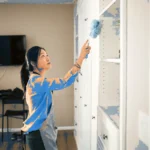
Dry dusting just launches allergens into the air, where they resettle an hour later. The pro method is damp and deliberate:
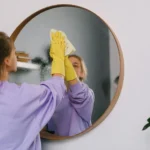
- Damp microfiber cloths only — they trap dust and pollen instead of scattering it
- Work top to bottom — ceiling fans and shelves first, baseboards and floors last, so nothing re-contaminates
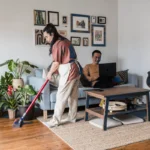
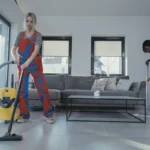
- Vacuum with a HEPA vacuum weekly — floors at minimum once a week; carpeted bedrooms twice if someone has allergies
- Wash bedding weekly in hot water — sheets and pillowcases collect dust mites fast; hot water kills them
- Do not forget curtains and throw pillows — fabrics are allergen hotels; launder what you can, vacuum the rest
Upholstered furniture deserves the same treatment. Vacuum it with an upholstery attachment monthly — or let a professional handle it during a deep clean.
Stop Pollen at the Front Door
Most of the pollen in your home walked in through the front door. A few small habits cut that traffic dramatically:
- Shoes off at the door — keep a tray or mat by the entrance and make it a house rule
- Wipe pets’ paws before they come in — and bathe dogs regularly during pollen season; fur is a pollen magnet
- Keep pets out of bedrooms — hard rule from allergy experts; the bed should be an allergen-free zone
- Change clothes after yard work — mowing or raking stirs up weed pollen; shower and change when you come in
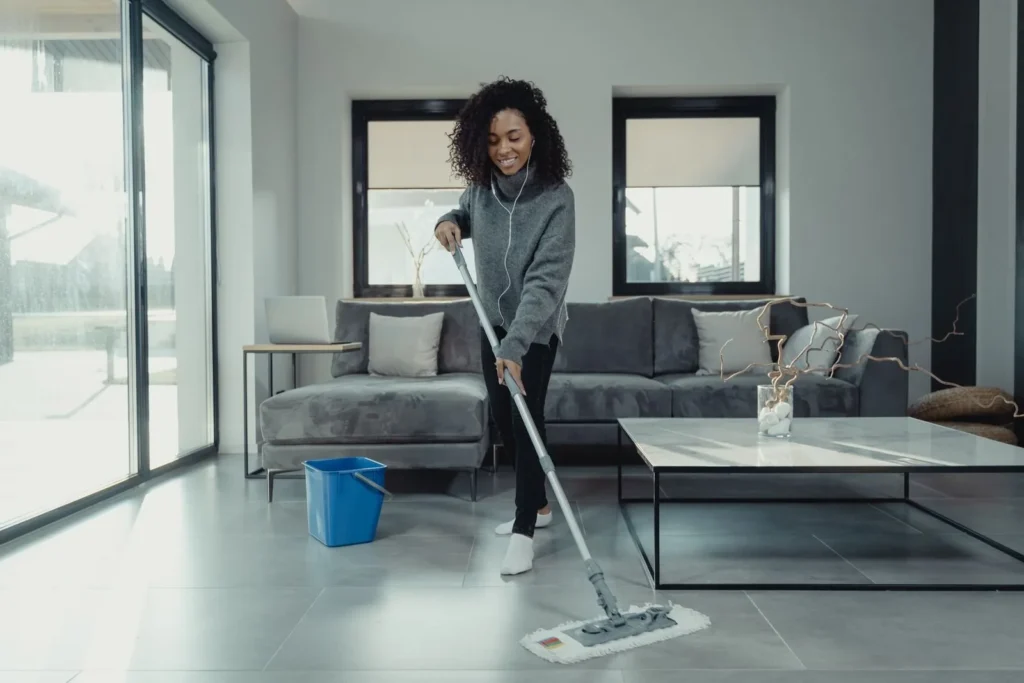
- Damp-mop hard floors weekly — dry sweeping pushes fine pollen around; a damp mop captures it
These habits cost nothing and do more than most people expect. The front door is where the battle is won or lost.
When DIY Is Not Enough: Call in the Pros
There is a limit to what cloths and vacuums can reach. Carpets, rugs, and upholstery hold allergens deep in their fibers — dust mites, pollen, and pet dander settle in and stay, wearing your floors down and aggravating allergies no matter how often you vacuum the surface.
Our team does in a few hours what takes a homeowner a full weekend: commercial-grade hot-water extraction for carpets, machine scrubbing and grout detailing for hard floors, and detailed dusting of the spots everyday cleaning misses. We bring every supply, we confirm flat pricing before we begin, and our trained, uniformed team treats your home like our own.
Call for a FREE Quote — (770) 733-6076
Frequently Asked Questions
How long does ragweed season last in Georgia?
Ragweed is Georgia’s primary fall pollen producer from September to mid-October. It typically tapers off in late October or early November when cooler weather sets in — so relief is usually just a few weeks away.
Does vacuuming really help with allergies?
Yes, if you do it right. Use a vacuum with a HEPA filter, vacuum carpeted floors at least weekly (twice weekly in bedrooms), and use an upholstery attachment on furniture monthly. A standard vacuum without HEPA filtration can blow fine allergens back into the air.
Should I keep my windows open or closed during pollen season?
Closed. Open windows let ragweed pollen pour straight in, especially on dry, windy days. Run your HVAC with a clean pleated or HEPA-grade filter instead, and crack a window only on low-pollen days if you need fresh air.
What indoor humidity level keeps mold and dust mites down?
Below 60%. The University of Georgia Extension recommends keeping your home under 60% humidity to prevent mold growth and slow dust mites. A simple hygrometer tells you where you stand; a dehumidifier handles the rest in damp rooms.