If you share your home with a dog or a cat, you already know the truth: pet odors are one of the most stubborn cleaning challenges a homeowner can face. Here in Georgia, it gets even trickier. Our humid climate can reactivate urine odors that seemed long gone, and pet fur tracks pollen and dust right back inside. The good news? With the right approach, you can keep a fresh, clean-smelling home — even with pets. This guide walks you through proven do-it-yourself methods and explains exactly when it’s time to call a professional.
Why Pet Odors Are Tougher in Georgia Homes
Pet odor isn’t just a surface problem, and Georgia’s climate gives it an extra edge. Understanding why odors persist is the first step toward truly getting rid of them.
- Humidity reactivates uric salts. When pet urine dries, it leaves behind uric acid crystals. Every humid day causes those crystals to release odor all over again — which is why a spot that seemed fine in winter can smell terrible by July.
- Fur tracks Georgia pollen and mold spores indoors. Your pet’s coat collects outdoor allergens and carries them into your carpets, upholstery, and bedding.
- Odors penetrate deep. Liquids don’t stop at the carpet fibers. They soak through into the carpet padding and sometimes the subfloor, where everyday surface cleaning never reaches.
How to Find the Source of Pet Odors
Before you can treat an odor, you have to find where it’s coming from. Pet urine spots are often invisible to the naked eye, especially on patterned or darker carpet.
- Use a black light. In a darkened room, a UV black light will make dried urine spots glow — it’s the simplest way to find hidden problem areas.
- Check the padding, not just the surface. Lift a corner of the carpet near suspect areas. If the backing or padding is stained or smells, surface cleaning alone won’t fix it.
- Search the usual hiding spots. Check under furniture, along baseboards and corners, behind doors, and around pet beds. Pets often return to the same quiet spots.
DIY Methods That Actually Work
For fresh spots and general pet smells, these do-it-yourself methods genuinely work — when used correctly.
- Enzyme cleaners are the gold standard. These products contain live enzymes that break down uric acid and proteins in urine, eliminating the odor at its source rather than just masking it. Saturate the area thoroughly, let it work for the time listed on the label, and keep pets away until it’s dry.
- Baking soda for general odors. Sprinkle baking soda liberally over carpets and upholstery, let it sit for several hours or overnight, then vacuum thoroughly. It absorbs everyday pet smells remarkably well.
- Vinegar solution for fresh spots. Mix equal parts white vinegar and water, blot up as much of the spot as possible first, then apply the solution. Vinegar neutralizes the ammonia scent in fresh urine — but test it on an inconspicuous area first.
- What NOT to use: avoid ammonia-based cleaners. They smell similar to urine to your pet and can actually attract your pet back to the same spot. Skip steam cleaners on urine stains, too — the heat can permanently set the odor and stain.
Keeping Your Home Fresh With Shedding Pets
Odor control with pets is mostly about routine. A few consistent habits make a dramatic difference.
- Vacuum frequently. Pet owners should vacuum high-traffic areas at least twice a week, using a vacuum with a HEPA filter to trap dander and fine particles.
- Wash pet bedding regularly. Pet beds collect oils, dander, and odor. Wash them every one to two weeks in hot water.
- Use lint rollers and furniture covers. Washable furniture covers protect upholstery, and a quick pass with a lint roller keeps fur from building up.
- Run an air purifier. A quality air purifier with a HEPA and activated carbon filter helps remove airborne dander and odor particles from your home.
When DIY Isn’t Enough: Professional Pet Odor Removal
Some odors are simply beyond what household products can handle. Years of accidents, odors trapped deep in padding and subfloor, and recurring smells that keep coming back all point to one thing: it’s time for professional help.
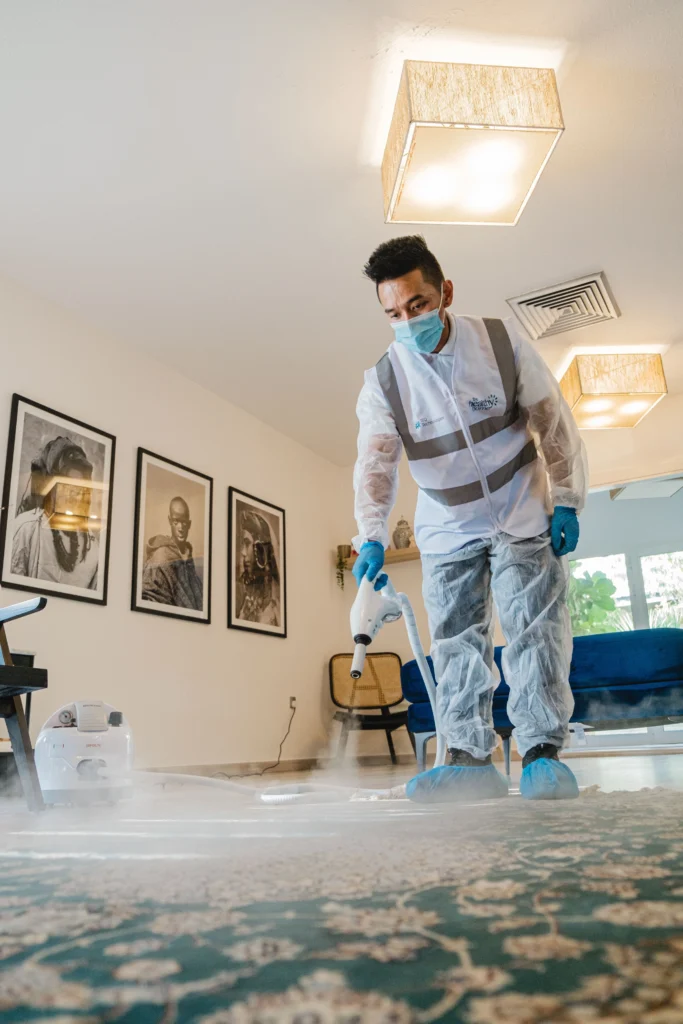
Professional deep carpet extraction reaches all the way into the carpet padding and subfloor where DIY cleaners can’t go. Professional-grade enzyme treatments break down odor compounds at a level store-bought products can’t match, and commercial equipment removes the deep-down residue that keeps reactivating in Georgia’s humidity.
If you’re dealing with persistent odors, old stains that never fully went away, or household members whose allergies keep flaring up, calling Fistfullofsudz is the smart move. Our pet odor removal service gets deep into carpet fibers, padding, and upholstery to eliminate odors for good — not just cover them up.
Ready for a fresher home? Call (770) 733-6076 today for a free estimate.
Frequently Asked Questions
How long does pet odor stay in a house?
Pet odor can linger indefinitely if the source isn’t fully removed. Uric acid crystals from urine can remain active for years, especially in humid climates like Georgia’s, where moisture reactivates them. Until the source — including the carpet padding — is properly treated, the smell will keep coming back.
Will pet urine smell come out of old carpet?
It depends on how deep the damage goes. If urine reached the padding or subfloor, surface cleaning won’t be enough. Professional extraction and enzyme treatments can often save the carpet, but in severe cases, replacing the padding may be the only complete fix.
How often should pet owners deep clean carpets?
Most pet owners should have their carpets professionally deep cleaned every 6 to 12 months. Homes with multiple pets, shedding breeds, or past urine accidents may need it more often to keep odors and allergens under control.
Are enzyme cleaners safe for pets?
Most enzyme cleaners are pet-safe once dry, but always read the label and keep pets away from treated areas until they’re completely dry. Look for products specifically labeled safe for use around pets, and avoid any product containing harsh chemicals or strong fragrances.