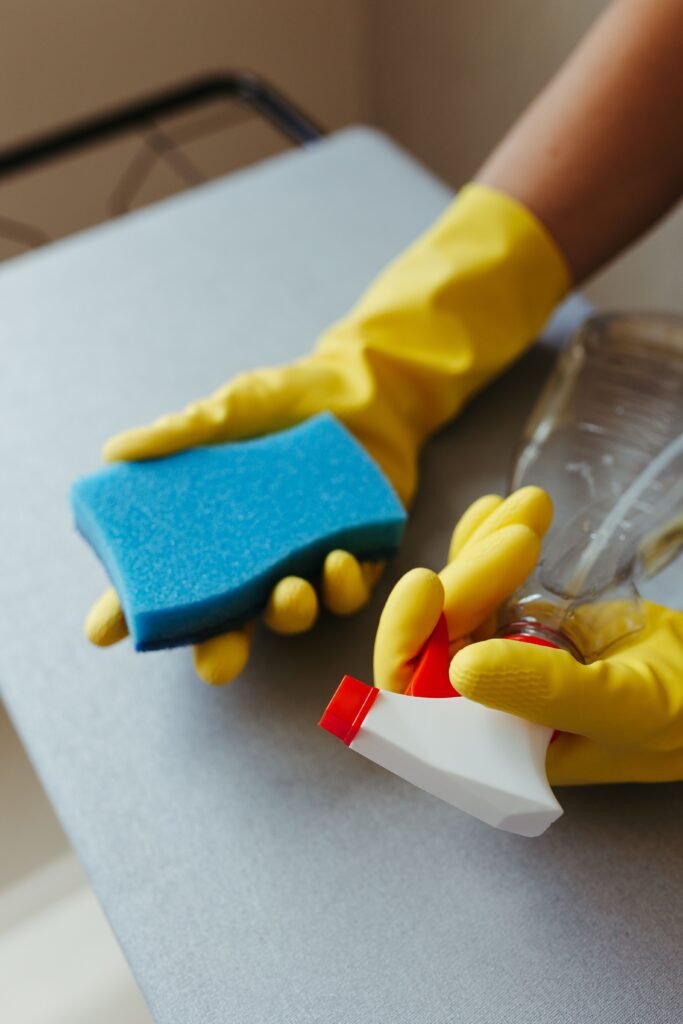
October in Riverdale means cooler evenings, Friday night lights, and — like it or not — the start of flu season. Every year the same story plays out in Clayton County homes: one kid brings a bug home from school, and within days the whole house is down. The good news? Learning how to disinfect your home during flu season the right way can slow that spread dramatically.
Here is what most people get wrong: wiping a counter with a damp cloth is not disinfecting. Real disinfecting is a two-step process, and it targets the spots everyone touches but nobody thinks about. If you would rather skip the science project, our disinfecting and sanitizing service handles the whole home for you — but if you are doing it yourself, here is exactly how the pros do it.
Clean First, Disinfect Second — The Order Matters
This is the single biggest mistake in DIY flu-season cleaning: spraying disinfectant onto a dirty surface. Disinfectants cannot punch through grease, dust, and grime to reach the germs underneath. Clean first with soap and water, then disinfect — that order is non-negotiable. Step one: wipe the surface with a general cleaner to remove dirt. Step two: apply an EPA-registered disinfectant and let it sit. Every disinfectant label lists a “dwell time,” usually 3 to 5 minutes of wet contact. Spray-and-immediately-wipe does almost nothing. Choose a product whose label says it is effective against influenza A, and never mix products. Gloves on, a window cracked for ventilation, and you are set. The CDC’s flu prevention guidance covers the official version of this routine if you want to go deeper.
The 10 Spots Flu Germs Love Most in Your Home
Flu viruses can survive up to 48 hours on hard surfaces. These are the high-touch surfaces worth disinfecting daily:
- Doorknobs and handles
- Light switches
- Faucet handles
- Refrigerator and microwave handles
- TV remotes and game controllers
- Phones and tablets
- Stair railings
- Toilet flush handles
- Countertops and desks
- Car steering wheel and door handles
Work top to bottom, room by room, so you never re-contaminate what you just cleaned.
Do Not Forget the Soft Stuff
Hard surfaces get all the attention, but fabrics hold germs too — usually for 8 to 12 hours. Wash bedding weekly in hot water. Bath towels get their own hot cycle. Wash the sick person’s laundry separately. Sanitize the hamper itself. Replace the toothbrush once someone recovers, and swap kitchen sponges weekly.
Stop Germs at the Front Door
Shoes off at the door. Backpacks get wiped down. Purses and bags get a landing zone. Wash hands the moment you walk in — 20 seconds, soap and water. Crack a window daily. If someone in the house is already sick, give them their own bathroom when possible and disinfect it daily.
When DIY Is Not Enough: Call in the Pros
Our team does in a few hours what takes a homeowner a full weekend: every high-touch surface, bathrooms top to bottom, kitchen detailing, floors, and the soft surfaces most people never get to. We bring every supply, we confirm flat pricing before we begin, and our trained, uniformed team treats your home like our own. Call for a FREE Quote — (770) 733-6076
Frequently Asked Questions
How long does the flu virus live on surfaces?
Up to 48 hours on hard surfaces, 8 to 12 hours on soft surfaces.
Does vinegar kill the flu virus?
No, use EPA-registered disinfectant.
How often should I disinfect?
High-touch surfaces daily, deeper weekly.
Should I throw away pillows after flu?
No, wash in hot water.