See those gray-black freckles creeping along your shower grout? That is mold and mildew, and in Riverdale, GA, they are practically a year-round house guest. Georgia’s humidity keeps indoor moisture high for months at a time, and bathrooms — steamy, warm, full of porous grout and caulk — are exactly where mold wants to live.
The good news: most bathroom mold is a surface problem, and surface problems have simple fixes. The trick is knowing which spots you can handle yourself, which ones need a second pass, and when it is time to call in help. Our crews see Georgia bathrooms every day through our regular house cleaning visits, and this guide is the same advice we give homeowners between visits.
Why Georgia Bathrooms Grow Mold So Fast
Mold only needs two things: moisture and something to eat. A bathroom hands it both — daily steam, plus soap scum and skin oils that collect in grout lines and caulk. In humid climates like ours, the air itself keeps surfaces damp long after the shower ends. UGA Extension advises keeping indoor humidity below 60%, but many Georgia bathrooms sit well above that after every hot shower.
Grout and caulk make it worse. Both are porous, so moisture and mold roots sink in where surface wiping cannot reach. That is why the same spots turn dark again a few weeks after you scrubbed them. Killing the visible mold without drying out the root cause is like mowing weeds — they come right back.
The 15-Minute Habit That Prevents Most Mold
Ask any cleaning professional what matters most against bathroom mold, and you will not hear a product name first. You will hear “ventilation.”
- Run the exhaust fan during every shower — and leave it on for 20 to 30 minutes after.
- No fan? Crack the bathroom window and leave the door open after you bathe.
- Check that your fan actually pulls air — a clogged or tired fan gives false confidence.
- Wipe down the shower walls and glass with a squeegee after each use.
That last one takes about five seconds and removes the standing water mold feeds on. Homes that follow these four steps see dramatically less regrowth than homes that scrub harder but never dry the room.
Your Mold-Fighting Kit (Nothing Fancy)
You do not need expensive specialty products. Pros reach for simple things:
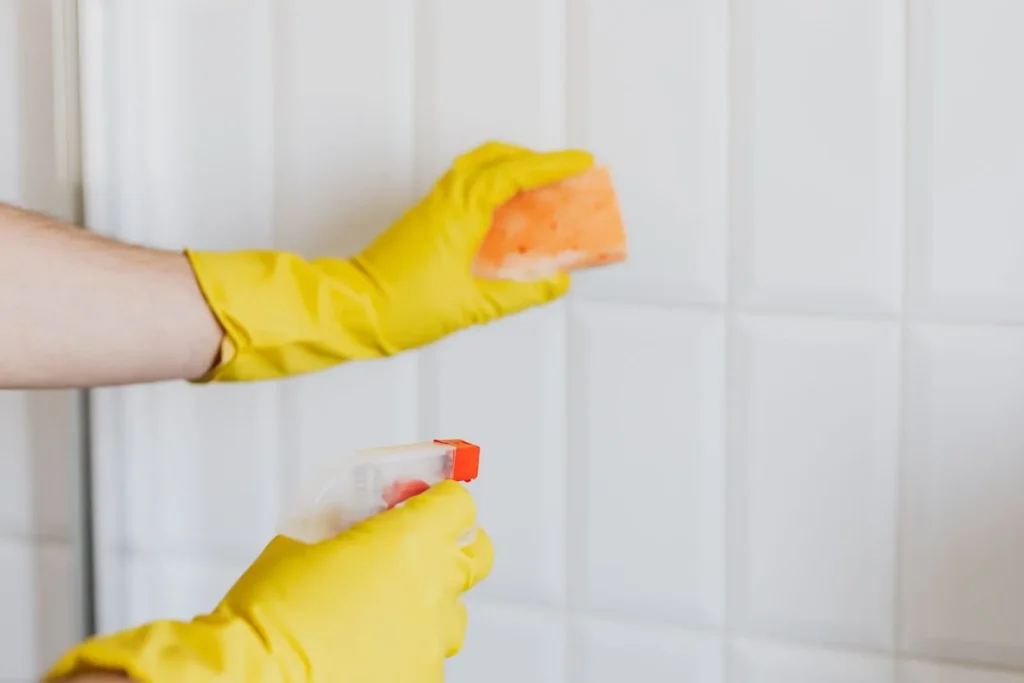
- Undiluted white vinegar in a spray bottle
- Baking soda
- 3% hydrogen peroxide
- A stiff grout brush or an old toothbrush
- Microfiber cloths and a squeegee
- Rubber gloves and a dust mask
Safety note: never mix cleaners. Bleach mixed with vinegar or ammonia creates dangerous fumes, and random chemical cocktails can destroy the very cleaners that work. Pick one approach per spot and let it do its job.
Grout and Tile: Where Mold Lives Most
Spray discolored grout with undiluted white vinegar, let it sit 30 to 60 minutes, then scrub with the grout brush. For stubborn lines, sprinkle baking soda on the damp grout before scrubbing — the mild abrasion lifts what vinegar loosened. Rinse with warm water and dry the area with a towel.
Hydrogen peroxide (3%) works well on lighter-colored grout: spray it on, wait 10 minutes, scrub, rinse. Always spot-test first on colored grout, and ventilate the room while you work.
Caulk, Curtains, and Ceilings
Caulk: If black spots sit on top of the caulk, vinegar and scrubbing usually clear them. But if the discoloration runs through the caulk, cleaning will not reach it — mold has grown into the material. Cut out the old bead, let the joint dry fully, and re-caulk with a mildew-resistant silicone.
Shower curtains: Be honest with yourself here — moldy curtains rarely come fully clean, and they re-grow fast. Replace inexpensive liners and wash fabric curtains in hot water. If your home has a glass door instead, that is one less mold haven to maintain.
Ceilings: Bathroom ceiling mold means humid air is not leaving the room, so fix the ventilation first. Spray the patch with vinegar, let it sit, and wipe clean. If the mold keeps returning in the same spot, repaint with a mold-resistant primer and bathroom paint once the area is fully dry.
The Spots Everyone Misses
Mold thrives in the places you never look at:
- Shower door tracks — standing water sits here for days. Scrub with a toothbrush and dry the track after cleaning.
- Under the sink cabinet — slow plumbing drips create hidden mold factories. Check fittings now and then.
- The exhaust fan cover — dust on the grille chokes airflow. Wipe it down so the fan can do its job.
- Behind the toilet base — condensation collects here; a quick wipe during bathroom cleaning prevents pink-and-gray film.
- Bath mats and towels — hang them to dry fully between uses and wash them in hot water regularly.
That pink or orange slime around drains and fixtures is usually bacteria, not mold — still worth scrubbing, but it responds to different cleaners and is not a health concern the way heavy mold is.
What NOT to Do
- Do not paint over active mold. It keeps growing underneath and shows through within months.
- Do not assume bleach solves porous surfaces. Bleach can lighten mold on hard tile, but it does not kill roots in grout or drywall — and it can damage some finishes.
- Do not skip drying. Scrubbing without fixing ventilation or airflow guarantees the mold returns.
- Do not ignore a returning patch. Mold that comes back in the same place after real cleaning is telling you there is a moisture source to find — a leak, a dead fan, or humidity that needs a dehumidifier.
When to Call a Professional
Most bathroom mold is a DIY job. Call for help when:
- The moldy area covers more than about 10 square feet.
- Mold returns quickly even after thorough cleaning and real ventilation.
- You smell mold but cannot find it — it may be inside walls, under flooring, or in ductwork.
- Anyone in the home has asthma, severe allergies, or a weakened immune system.
Our deep cleaning service at Fistfullofsudz handles the mold-prone bathroom work most homeowners put off — grout detailing, caulk lines, fan covers, under-sink cabinets, and the tile surfaces that never quite come clean. After the scrub, our disinfecting and sanitizing service leaves bathroom surfaces sanitized and guest-ready.
Call for a FREE Quote — (770) 733-6076
Frequently Asked Questions
What kills bathroom mold permanently?
No cleaner works permanently on its own — mold returns wherever moisture stays. The lasting fix is ventilation (fan 20–30 minutes after every shower, squeegeed walls) plus cleaning with vinegar or hydrogen peroxide. Fix the moisture and the mold has nowhere to thrive.
Is bathroom mold dangerous?
Small surface patches are mostly a nuisance, but heavy or hidden mold can aggravate allergies and asthma. If anyone in your home has respiratory issues, treat mold aggressively and call a professional for anything beyond small surface areas.
Why does my shower caulk keep turning black?
Mold grows into porous caulk where surface cleaners cannot reach. If discoloration runs through the bead, cut it out and re-caulk with mildew-resistant silicone — no cleaner will fix caulk that is moldy all the way through.
Can I use bleach on bathroom mold?
Bleach lightens mold on hard, non-porous tile, but it does not kill roots in porous grout or drywall. Vinegar or 3% hydrogen peroxide are better choices for grout lines, with proper ventilation and drying afterward.
How do I stop mold from coming back in my bathroom?
Run the exhaust fan 20–30 minutes after every shower, squeegee the walls, fix any plumbing leaks, wash bath mats and curtains in hot water regularly, and keep indoor humidity below 60%. Prevention is the only real cure.